Live

New Updates: Speed-optimized. Endless reading. Active now...

🔬 Science

Explore our latest analyses, data trends, and curated insights on Science.

Advertisement

Top Billboard Banner

Premium Layout Reserve Space • Status: Framework Mocked

The Shifting Crust: How Thawing Permafrost and Feedback Loops are Redrawing Earth's Geographyscience

The Shifting Crust: How Thawing Permafrost and Feedback Loops are Redrawing Earth's Geography

The article examines a major shift in climate tracking highlighted by the MIT Technology Review, where rising greenhouse gas levels are rapidly thawing sub-Arctic permafrost, triggering large-scale landslides and intensifying debates over climate model feedback loops. Grounded in soil mechanics, the piece explains how the melting of subterranean 'pore ice' neutralizes friction, causing catastrophic retrogressive thaw slumps and high-speed mud flows. This physical collapse unlocks the planet's ultimate carbon megabank - which stores 1,500 billion tonnes of organic matter - unleashing massive plumes of carbon dioxide and methane. The text details the current high-stakes division within the computational climate modeling community: one faction viewing this linearly as a manageable regional variable, and another warning that current grid models smooth over explosive, localized non-linear tipping cascades. Finally, it outlines the unique socio-economic and logistical realities this shifting crust imposes across Gen Z, Millennials, and Baby Boomers.


By Science Desk⏱️ 9 min read·2026-10-05
The Redline Era: Navigating Earth's Shocking New Thermal Velocityscience

The Redline Era: Navigating Earth's Shocking New Thermal Velocity

The article details a profound shift in climate dynamics based on groundbreaking research from the Potsdam Institute for Climate Impact Research, which confirms that Earth's warming velocity has accelerated to 0.35°C per decade—nearly double the 0.18°C per-decade linear pace recorded between 1970 and 2015. The text deconstructs the Aerosol Masking Paradox, explaining how successful clean-air regulations inadvertently shattered an accidental atmospheric mirror of sulfur dioxide, exposing the planet to the unmasked thermal force of greenhouse gases. Amplified by ocean thermal saturation and the collapse of the Arctic albedo shield, this non-linear climate phase introduces severe infrastructure strain, causing hydro-power bottlenecks, transit grid buckling, and crop zone migrations. The analysis outlines the heightened risk of self-reinforcing tipping cascades (permafrost outgassing and AMOC deceleration) and maps these modern challenges across Gen Z, Millennials, and Baby Boomers, calling for a quadrupling of structural adaptation solutions.

By Science Desk⏱️ 9 min read·2026-10-02
Ancient Hydrogen Glow: How a Canadian Telescope is Listening to the Cosmic Dawnscience

Ancient Hydrogen Glow: How a Canadian Telescope is Listening to the Cosmic Dawn

The article explores how the Canadian Hydrogen Intensity Mapping Experiment (CHIME) radio telescope has revolutionized cosmology by detecting a faint 21-centimetre neutral hydrogen signal from 9 billion years ago. By abandoning traditional movable dishes for stationary, snowboard-park-style cylindrical meshes that utilize high-throughput digital supercomputers (7 Tbps), CHIME acts as a cosmic time machine. It bypasses the limitations of optical telescopes by tracking the universe’s most abundant element. This discovery maps out early hydrogen distribution, helping scientists measure Baryon Acoustic Oscillations (BAO) to resolve the 'Hubble Tension' and decode the acceleration of Dark Energy. This technical milestone shifts astrophysics into a big-data discipline, offering unique benefits and insights across Gen Z, Millennials, and Baby Boomers alike.

By Science Desk⏱️ 9 min read·2026-09-23
The Invisible Shield and the Digital Grid: Balances, Carbon Footprints, and the Future of AIscience

The Invisible Shield and the Digital Grid: Balances, Carbon Footprints, and the Future of AI

As the global community marks environmental milestones like World Ozone Day, which celebrates the successful healing of the Earth's ozone layer under the Montreal Protocol, a new ecological frontier has emerged inside the world's hyper-scale data centres. The explosive expansion of massive artificial intelligence models is placing an unprecedented strain on the global energy grid and local natural resources. Running frontier neural networks demands an astronomical volume of electricity for training and inference, alongside millions of litres of water for server thermal management. To ensure that digital innovation does not derail global climate trajectories, the technology sector must transition toward Sustainable Infrastructure Governance - embracing green code, closed-loop liquid cooling, and co-locating data factories directly with renewable energy grids.

By Science Desk⏱️ 9 min read·2026-09-21
Cosmic Harmonics: Inside Saturn's Mysterious Decagonal Wave and Earth's Autumn Skiesscience

Cosmic Harmonics: Inside Saturn's Mysterious Decagonal Wave and Earth's Autumn Skies

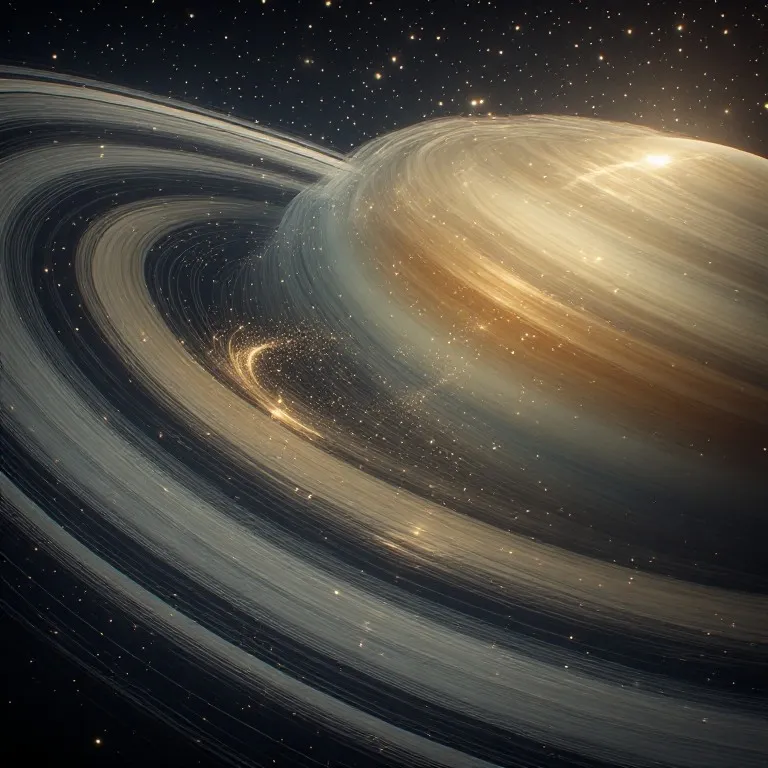
The solar system recently treated humanity to a dual masterclass in cosmic geometry and astronomical alignment. Deep in the outer solar system, NASA's Hubble Space Telescope discovered a rare, 10-sided (decagonal) atmospheric wave circling Saturn's southern pole. Driven by the complex physics of fluid dynamics and Rossby wave resonance, this multi-thousand-kilometer wide storm provides an incredible laboratory for tracking planetary meteorology. Simultaneously, skywatchers on Earth enjoyed a stunning terrestrial display as a brilliant Venus conjunction illuminated the twilight sky directly alongside the deep amber glow of the Harvest Moon. Together, these celestial events highlight the enduring legacy of the Hubble telescope and serve as a universal reminder of the mathematical precision guiding our universe.

By Science Desk⏱️ 8 min read·2026-09-17
The Deep-Sea Data Highway: How the Petal Transoceanic Cable Ignited a Petabit Internet Revolutionscience

The Deep-Sea Data Highway: How the Petal Transoceanic Cable Ignited a Petabit Internet Revolution

While wireless satellites capture headlines, over 95% of international internet traffic travels through a delicate network of underwater fiber-optic cables resting on the ocean floor. Driven by the explosive data demands of generative AI, spatial computing, and global automation, this legacy network has been pushed to a severe bandwidth bottleneck. This structural limitation has been shattered by the deployment of Petal - a 4,300-mile petabit transoceanic internet cable that has pushed ocean-floor data speeds to an unprecedented 1 million gigabits per second (1 petabit). By abandoning traditional single-core fibers in favor of Multi-Core Fiber (MCF) technology and Spatial Division Multiplexing (SDM), Petal functions as a multi-lane light superhighway. The breakthrough completely eradicates cross-border network latency, laying the groundwork for a truly real-time global economy, zero-lag enterprise cloud scaling, and secure data pipelines built to withstand the brutal environment of the deep ocean.

By Science Desk⏱️ 9 min read·2026-09-03
The Unshakable Second: How Vienna's Self-Stabilizing Nuclear Clock Rewrites Timekeepingscience

The Unshakable Second: How Vienna's Self-Stabilizing Nuclear Clock Rewrites Timekeeping

Humanity's most precise timekeepers - standard atomic clocks - rely on the microscopic vibrations of outer electron shells to define a second. However, because electrons sit on the edges of atoms, they remain vulnerable to minor environmental shifts like temperature and stray magnetic fields. This barrier has been shattered by researchers in Vienna who built the world's first self-stabilizing nuclear clock. By targeting the hyper-dense core (nucleus) of a unique Thorium-229 atom using low-energy UV lasers, this clock is practically immune to outside interference. Featuring a built-in feedback loop that self-corrects laser drift in real time, this technological leap is poised to surpass the precision of atomic clocks by orders of magnitude. The innovation will revolutionize modern infrastructure, paving the way for millimeter-accurate GPS, autonomous subsea and urban drone navigation, and independent deep-space travel.

By Science Desk⏱️ 9 min read·2026-08-27
Unlocking the Third Magnet: How the Altermagnetism Breakthrough Rewrites Physics and Tomorrow's Techscience

Unlocking the Third Magnet: How the Altermagnetism Breakthrough Rewrites Physics and Tomorrow's Tech

For over a century, physics taught that permanent magnetism was strictly split into two forms: ferromagnetism (aligned spins with a strong magnetic field) and antiferromagnetism (alternating spins that cancel out). This binary has been completely upended by the discovery of a third form of magnetism called altermagnetism. Found in specialized crystal lattice structures, altermagnets possess a net-zero external magnetic field while retaining highly directional electronic traits. This breakthrough solves the greatest puzzle in spintronics by giving engineers the absolute best of both worlds: microchips with zero magnetic cross-talk that can be packed to the nanometer scale, and high-speed electrical readability. The result is a looming evolution in electronics, promising ultra-fast computing, hardware completely immune to magnetic data corruption, and devices that consume minimal power without overheating.

By Science Desk⏱️ 9 min read·2026-08-25
The Element of Tomorrow: The Science, Power, and Global Reality of the Hydrogen Enginescience

The Element of Tomorrow: The Science, Power, and Global Reality of the Hydrogen Engine

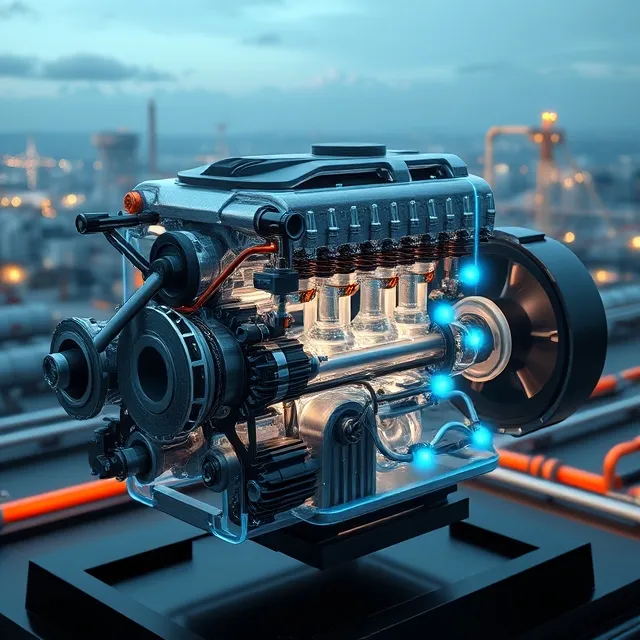
A comprehensive overview of hydrogen propulsion systems and their role in the global energy shift. The text highlights the mechanical distinctions between Hydrogen Fuel Cells (FCEVs), which generate electricity electrochemically, and Hydrogen Internal Combustion Engines (H2-ICE), which burn the gas directly inside modified engine blocks. It explores hydrogen's vital role in heavy transit, long-haul freight, and aviation, noting the historic milestone of the world’s first megawatt-class hydrogen turboprop test flight. Tracking its thermal efficiency against traditional petrol and battery electric systems, the text addresses the environmental debate, emphasizing that hydrogen's green status depends entirely on shifting production from fossil-fuel-derived 'grey hydrogen' to renewable-powered 'green hydrogen.' Finally, it outlines the retail market landscape, noting that mass retail availability is deferred until 2030 or later due to extensive infrastructure and green sourcing constraints.

By Science Desk⏱️ 9 min read·2026-07-30
The Compression Crucible: The Science and Global Evolution of the Diesel Enginescience

The Compression Crucible: The Science and Global Evolution of the Diesel Engine

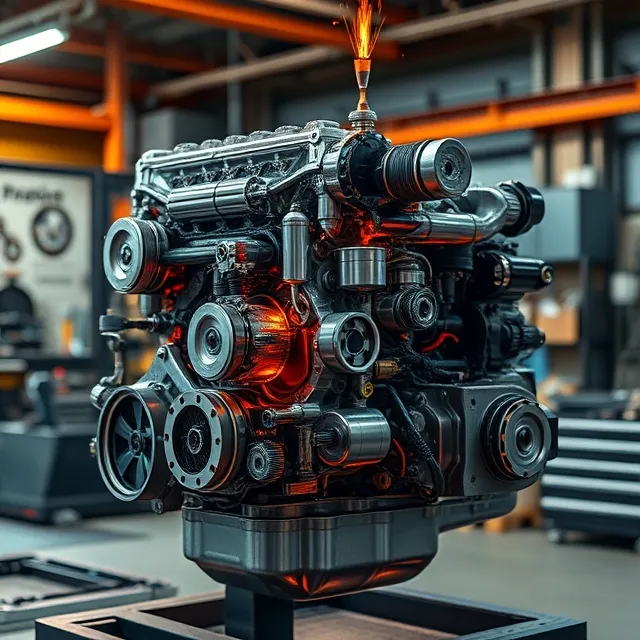
An in-depth look at compression-ignition technology and its critical role in global transport. The article details the core physics of the diesel cycle, explaining how it uses high-pressure compression rather than spark plugs to ignite fuel. It clarifies the relationship between diesel and aviation jet fuels, tracks the engine's timeline from Rudolf Diesel's heavy prototypes to modern Common Rail Direct Injection (CRDI) and Selective Catalytic Reduction (SCR) systems, and highlights its status as the king of thermal efficiency (reaching over 50% in marine setups). Finally, it outlines shifting generational attitudes toward diesel power and points toward a sustainable future driven by Hydrotreated Vegetable Oil (HVO), renewable e-diesels, and hydrogen combustion frameworks.

By Science Desk⏱️ 8 min read·2026-07-29
The Voltage Surge: The Science, Reality, and Global Evolution of Electric Motorsscience

The Voltage Surge: The Science, Reality, and Global Evolution of Electric Motors

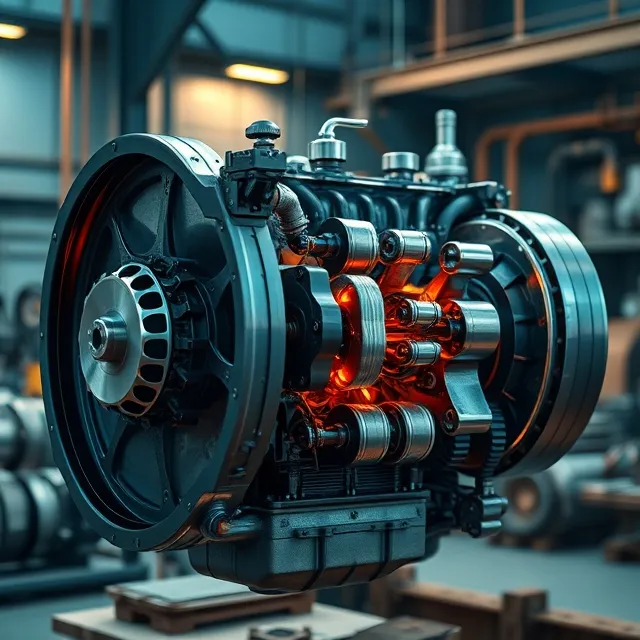
the mechanics, history, and environmental realities of electric propulsion. The text breaks down the core science of electromagnetism - detailing how the stator and rotor generate torque without physical combustion—and addresses the physical weight and energy-density limitations that make pure electric flight difficult for commercial airliners and fighter jets. It traces EV history from its popular early days in the 1900s through the digital resurgence to the future of solid-state batteries. Highlighting a system efficiency of 85-90%, it directly addresses the environmental debate, proving that despite heavy mining and manufacturing footprints, EVs dramatically reduce lifecycle emissions compared to petrol cars. Finally, it outlines shifting generational viewpoints on this massive transport transition.

By Science Desk⏱️ 10 min read·2026-07-29
The Combustion Revolution: The Science and Evolution of the Petrol Enginescience

The Combustion Revolution: The Science and Evolution of the Petrol Engine

The profound transformation of internal combustion technology over the last century. Starting with the fundamental physics of the four-stroke cycle used across bikes, cars, and traditional planes, the article contrasts these piston systems with the continuous-combustion gas turbine architectures engineered for supersonic fighter jets. It explores the technological leap from primitive, mechanical carburettors to modern, AI-driven Engine Control Units (ECUs) and high-pressure direct injection systems, demonstrating how thermal efficiency has climbed from a wasteful 10% to over 50% in hybrid hypercars. Finally, it outlines the differing generational perspectives on combustion power - ranging from Baby Boomer nostalgia to Gen Z sustainability demands - and introduces the future of carbon-neutral motoring through synthetic e-fuels and advanced hybridization.

By Science Desk⏱️ 8 min read·2026-07-28
The Cosmic Eye: How Space Telescopes Rebuilt Our Understanding of the Universescience

The Cosmic Eye: How Space Telescopes Rebuilt Our Understanding of the Universe

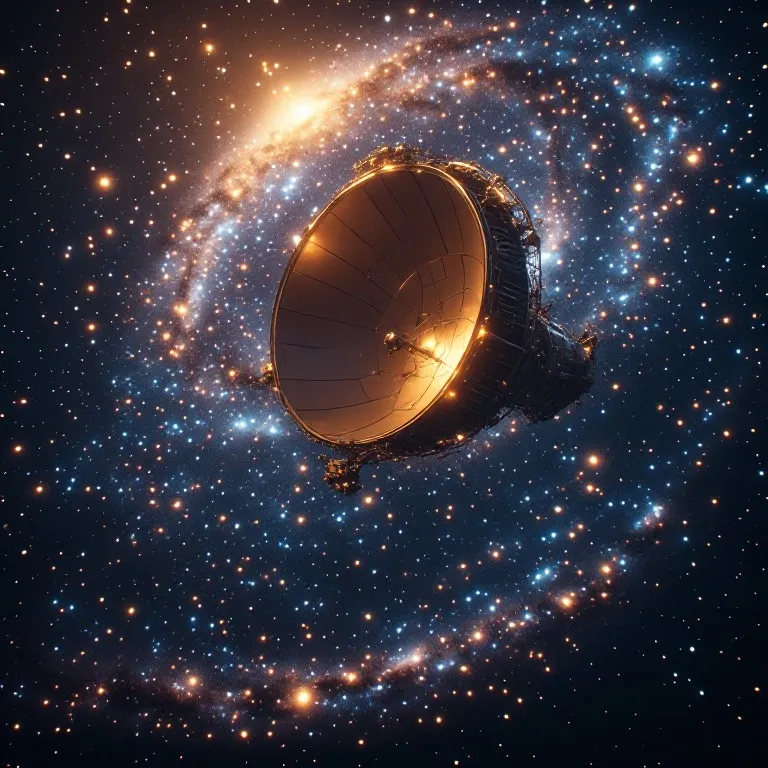
Space telescopes have completely transformed astronomy by bypassing Earth's atmospheric distortion to observe the cosmos across multiple wavebands. From early analog systems to the advanced infrared capabilities of modern flagships, these instruments have provided empirical evidence for the age of the universe, the existence of exoplanets, and the mechanics of cosmic expansion. By offering a direct look back into deep cosmic time, space observatories inspire every generation, continuously reshaping our understanding of planetary systems, cosmic chemistry, and our fundamental place in the universe.

By Science Desk⏱️ 11 min read·2026-07-23
Advertisement

Footer High-Impression Banner

Premium Layout Reserve Space • Status: Framework Mocked