The Combustion Revolution: The Science and Evolution of the Petrol Engine
The profound transformation of internal combustion technology over the last century. Starting with the fundamental physics of the four-stroke cycle used across bikes, cars, and traditional planes, the article contrasts these piston systems with the continuous-combustion gas turbine architectures engineered for supersonic fighter jets. It explores the technological leap from primitive, mechanical carburettors to modern, AI-driven Engine Control Units (ECUs) and high-pressure direct injection systems, demonstrating how thermal efficiency has climbed from a wasteful 10% to over 50% in hybrid hypercars. Finally, it outlines the differing generational perspectives on combustion power - ranging from Baby Boomer nostalgia to Gen Z sustainability demands - and introduces the future of carbon-neutral motoring through synthetic e-fuels and advanced hybridization.
📋 Quick Article Navigation Roadmap
Mid-Post Content Inline
Premium Layout Reserve Space • Status: Framework Mocked
Have you ever stopped to marvel at the raw power humming beneath the hood of your car or the roar of a fighter jet tearing through the sky? At the heart of modern transit is a marvel of engineering: the internal combustion petrol engine. For over a century, this mechanical powerhouse has shaped human freedom, dictating how we commute, travel across continents, and defend nations.
When petrol engine technology shifts, the entire global grid shifts with it. Your daily commute becomes faster, global supply chains tighten, and international travel becomes accessible to billions. But beneath the chrome and steel lies a complex dance of physics, chemistry, and computing.
To truly understand how this technology shapes our world, we need to strip away the complex engineering jargon. Let’s lift the hood on how petrol engines work, how they have evolved from smoky early models into hyper-efficient modern beasts, and where they are heading next.
🏛️ 1. The Core Science: How a Petrol Engine Harnesses Fire
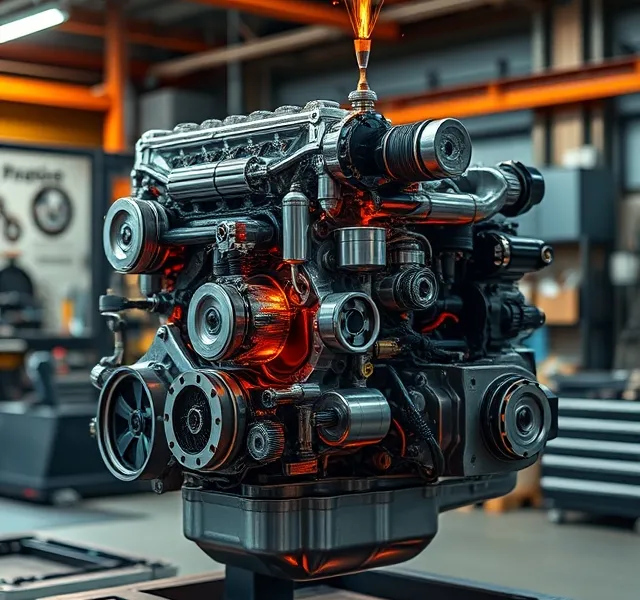
Think of a petrol engine as a controlled, high-speed fireplace that turns heat into physical movement. While a bike, a car, and an airplane look entirely different on the outside, their traditional petrol powerplants rely on the exact same fundamental science: The Four-Stroke Cycle.
To understand how money, fuel, and air transform into motion, engineers look at four distinct steps:
- The Intake Stroke: The engine breathes in. A precise mixture of vaporized petrol fuel and fresh air is drawn into a sealed cylinder chamber.
- The Compression Stroke: The engine squeezes. A moving piston tightly packs the fuel-air mixture into a tiny space, multiplying its potential explosive energy.
- The Power Stroke: The spark happens. A spark plug ignites the compressed gas, creating a controlled explosion that violently forces the piston down. This downward thrust turns the crankshaft, which ultimately spins your wheels or propellers.
- The Exhaust Stroke: The engine cleans house. The burnt gases are pushed out of the cylinder through an exhaust valve so the cycle can start all over again.
During global manufacturing setups, engineering institutions modify these variables to match specific needs. A motorcycle engine prioritizes high RPMs (rotations per minute) for rapid acceleration in a lightweight frame. A car engine focuses on a balance of torque and smooth reliability for daily commuting. Traditional propeller airplanes utilize specialized layouts to keep power consistent even when flying through thin, cold air at high altitudes.
🚀 2. The Apex Adaptations: Fighter Jets and the Jet Fuel Distinction
When we shift our gaze from a commuter car to a supersonic fighter jet, the engineering parameters undergo an atmospheric shift. It is a common misconception that fighter jets run on standard automotive petrol. In reality, they utilize specialized aviation turbine fuel (similar to highly refined kerosene) to power gas turbine engines rather than piston engines.
The physical demands of military combat dictate this structural divergence:
- Continuous Combustion: Unlike a car engine that relies on individual sparks, a fighter jet engine ignites fuel continuously in a high-pressure wind tunnel environment.
- The Afterburner System: To achieve extreme combat velocities, fighter jets spray raw fuel directly into the hot exhaust stream, creating an immediate, massive burst of extra thrust.
- Thermal Endurance: Jet engines utilize exotic ceramic matrices and single-crystal metal alloys capable of operating at temperatures hotter than the melting point of the metal itself.
By swapping traditional reciprocating pistons for spinning turbine blades, aviation architects can push aircraft past the sound barrier, unlocking performance metrics that would completely shatter a standard automotive engine framework.
⏳ 3. The Historical Timeline: From Smoky Foundries to Smart Chips
Petrol engine technology did not emerge fully formed; it evolved through distinct technological eras driven by the pursuit of absolute efficiency.
- ⚙️ The Genesis Era (Late 1800s - Early 1900s): The earliest petrol engines were heavy, dangerously unpredictable, and highly inefficient. They relied on primitive carburettors to mechanically mix fuel and air, resulting in thick exhaust smoke and frequent breakdowns. These early systems converted less than 10% of fuel energy into actual motion, wasting the rest as raw heat and unburnt pollution.
- 🔌 The Electronic Transition (Mid to Late 1900s): As highways expanded and global trade accelerated, the analog framework reached its structural limit. The industry shifted toward Electronic Fuel Injection (EFI) systems. Instead of relying on mechanical vacuum pressure, computers began calculating exactly how much fuel to spray into the cylinders, vastly improving reliability and reducing emissions.
- 💻 The Digital Native Era (Current Technology): Today, an engine is essentially a supercomputer wrapped in iron. Modern engines utilize Direct Injection and Variable Valve Timing (VVT) to micro-manage every single microsecond of the combustion cycle. Guided by an Engine Control Unit (ECU), today’s vehicles continuously read atmospheric pressure, fuel quality, and temperature to optimize performance on the fly.
📈 4. The Efficiency Matrix: Doing More with Less
The primary metric of success for engine evolution is Thermal Efficiency - the percentage of energy from fuel that successfully translates into physical power rather than being wasted as heat.
| Engine Era & Type | Average Thermal Efficiency | Core Technical Characteristic |
|---|---|---|
| Early Piston Engines (1900s) | 10% - 15% | Low compression ratios, heavy cast-iron frames, and crude mechanical timing. |
| Mid-Century Automotive (1970s) | 20% - 25% | Introduction of early catalytic converters and primitive electronic ignitions. |
| Modern Eco-Boost Engines (2020s) | 35% - 40% | High-pressure direct injection, twin-scroll turbochargers, and low-friction coatings. |
| Formula 1 & Hybrid Hypercars | 50% + | Advanced thermal energy recovery systems (MGU-H) paired with lean-burn combustion. |
By utilizing turbocharging - a process that captures escaping exhaust gases to force more fresh air back into the engine - modern engineers can make a tiny 3-cylinder engine produce significantly more power than a massive, heavy V6 engine from thirty years ago.
👥 5. Generational Impacts: How the Engine Shapes Our Lives
Economic and technological shifts don’t just change machines; they directly alter the human experience across different age brackets.
The Heritage Generation (Baby Boomers)
For older generations, the petrol engine represents hands-on freedom and tangible mechanics. They grew up in an era of muscle cars and manual tuning, where fixing an engine required a wrench rather than a software update. For them, the roaring sound of a well-tuned engine carries deep nostalgic value.
The Shift Generation (Millennials and Gen X)
This demographic sits at the structural crossroads of the energy transition. They experienced the peak of raw petrol power but are now the primary buyers balancing family budgets against fluctuating fuel prices, driving the demand for highly efficient commuter vehicles and hybrid systems.
The Eco-Conscious Vanguard (Gen Z and Gen Alpha)
For younger generations entering a climate-conscious world, the traditional petrol engine is viewed through a lens of sustainability. They expect absolute efficiency, minimal carbon footprints, and seamless digital integration, shifting their loyalty toward electric alternatives or highly optimized hybrid powertrains.
🔮 6. The Horizon: What Lies Ahead for Engine Technology?
The petrol engine is not facing an abrupt extinction; instead, it is undergoing an intense, high-tech transformation to survive in a zero-emission future.
The next frontier of combustion technology is moving rapidly toward Synthetic E-Fuels. By capturing carbon dioxide directly from the atmosphere and combining it with hydrogen extracted from water, scientists are creating synthetic petrol. When burned, this fuel only releases the carbon that was already taken out of the air, making traditional internal combustion engines completely carbon-neutral.
Simultaneously, the industry is mastering the Hybridization Convergence. Future powertrains will not choose between petrol and electricity; they will merge them completely. Ultra-small, hyper-efficient petrol engines will run at a single, mathematically perfect speed purely to generate electricity for electric motors, eliminating the transmission entirely and pushing thermal efficiency metrics to historic highs.
🏁 Conclusion: The Enduring Legacy of Motion
Ultimately, the evolution of the petrol engine proves that human ingenuity knows no bounds. What began as a clunky, smoky mechanical experiment has transformed into a hyper-precise, digitally managed engine that powers global civilization.
By understanding how thermal dynamics, computer processing, and structural design operate together, global citizens can make smarter choices about transit, investments, and environmental footprints. Whether you are riding a motorcycle, catching a commercial flight, or analyzing global logistics, staying informed ensures you are ready for a clean, fast, and frictionless future of global mobility.
Disclaimer: The articles on this website are created for informational and educational purposes with the assistance of artificial intelligence (AI) technologies. While our editorial team reviews, edits, and fact-checks all content to ensure maximum accuracy, Thank Wisdom and affiliates makes no warranties or representations regarding the completeness, reliability, or absolute accuracy of the information provided. Readers should consult relevant professionals before making decisions based on this content.