The Voltage Surge: The Science, Reality, and Global Evolution of Electric Motors
the mechanics, history, and environmental realities of electric propulsion. The text breaks down the core science of electromagnetism - detailing how the stator and rotor generate torque without physical combustion—and addresses the physical weight and energy-density limitations that make pure electric flight difficult for commercial airliners and fighter jets. It traces EV history from its popular early days in the 1900s through the digital resurgence to the future of solid-state batteries. Highlighting a system efficiency of 85-90%, it directly addresses the environmental debate, proving that despite heavy mining and manufacturing footprints, EVs dramatically reduce lifecycle emissions compared to petrol cars. Finally, it outlines shifting generational viewpoints on this massive transport transition.
📋 Quick Article Navigation Roadmap
Mid-Post Content Inline
Premium Layout Reserve Space • Status: Framework Mocked
Have you ever noticed how the sound of our streets is fundamentally changing? The classic roar of internal combustion engines is steadily giving way to a smooth, futuristic hum. At the center of this quiet revolution is the electric motor. While it feels like a modern invention, this technology has been quietly developing for nearly two centuries. Today, it is scaling up to power everything from lightweight commuter bikes to heavy freight trucks, and even experimental aircraft.
When electric vehicle (EV) tech advances, it impacts global mineral supply chains, localized electricity grids, and everyday consumer choices. However, underneath the shiny battery packs and high-tech dashboards lies a fascinating world of electromagnetism, software, and chemistry. Furthermore, it sparks a critical global debate: Is this technology genuinely saving the environment, or is its green reputation just a clever marketing myth?
To understand where the transportation grid is heading, let’s pull back the casing on how electric motors work, how they have evolved from early copper loops into modern powerhouses, and whether they are truly delivering a cleaner future.
🏛️ 1. The Core Science: Spinning Wheels with Invisible Magnetic Fields
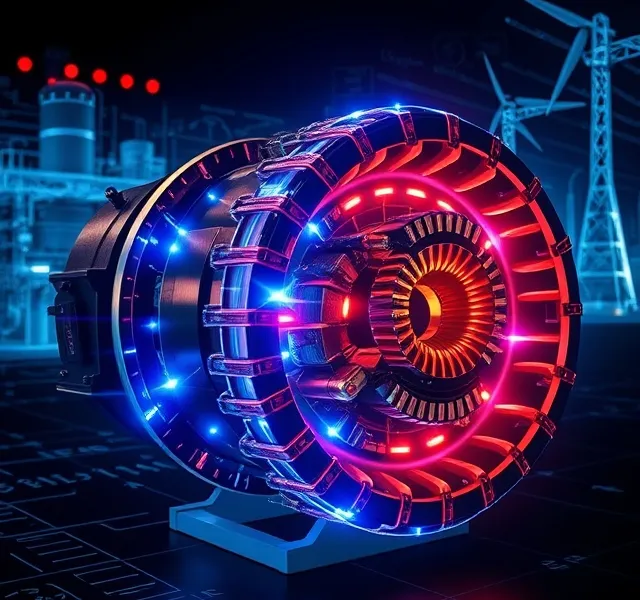
Unlike petrol or diesel engines that rely on heat, fire, and moving pistons, an electric motor relies entirely on electromagnetism. It strips away hundreds of moving parts, replacing them with a simple, elegant interaction between magnets.
To understand how an electric motor creates motion, engineers look at two primary components:
- The Stator: The permanent outer ring. This part stays completely still and contains tightly wound copper coils. When electricity flows from the battery into these coils, it creates a powerful, rotating magnetic field.
- The Rotor: The internal spinning core. This component sits inside the stator. It also contains magnets or its own induced electrical charge.
- The Electromagnetic Push: According to the fundamental laws of physics, like magnetic poles repel each other, and opposite poles attract. By continuously shifting the electrical current, the stator’s magnetic field forces the rotor to chase it, creating rapid rotational force (torque) instantly.
During modern manufacturing, engineering teams modify this setup to match specific vehicles. An electric motorcycle requires compact, lightweight Permanent Magnet Synchronous Motors (PMSMs) for immediate throttle response. A commuter car often pairs these with Induction Motors to balance highway efficiency and stop-and-go city driving. For heavy freight vehicles, engineers scale up the voltage architectures to deliver the massive towing power needed to move heavy tonnage without overheating the system.
🚀 2. The Aviation Frontier: Commercial Electric Planes and the Fighter Jet Paradox
When we shift our focus from city streets to the open skies, electric propulsion faces its most difficult engineering challenge. While a handful of small, two-seater electric trainer planes are successfully flying today, powering commercial airliners or military fighter jets with pure electricity remains incredibly difficult.
The laws of physics explain why standard batteries are currently locked out of supersonic combat:
- The Gravitational Weight Trap: Jet fuel is exceptionally energy-dense. A standard lithium-ion battery pack is roughly 30 to 40 times heavier than an equivalent weight of aviation fuel for the exact same amount of energy output. For a massive commercial plane or a fighter jet, carrying that much dead weight makes takeoff practically impossible.
- The Dynamic Weight Advantage: A traditional fighter jet gets lighter as it burns fuel during a mission, making it more agile for combat maneuvers. An electric aircraft weighs exactly the same at landing as it did at takeoff, forcing the wings to carry a heavy, depleted battery pack the entire time.
- The Velocity Bottleneck: Supersonic flight requires the explosive, high-temperature exhaust velocity that only chemical combustion or gas turbines can produce. Electric propellers or ducted fans simply cannot push air fast enough to break the sound barrier.
Because of these limitations, current aviation innovation focuses on Hybrid-Electric Architectures for regional flights, using traditional engines for takeoff and switching to electric power during cruise phases.
⏳ 3. The Historical Timeline: From 19th-Century Carriages to Solid-State Systems
The electric vehicle is often viewed as a brand-new concept, but its historical timeline reveals a fascinating, circular journey:
- ⚙️ The Forgotten Golden Age (Late 1800s - Early 1900s): In the year 1900, electric cars were incredibly popular, making up roughly one-third of all vehicles on American roads. They were favored because they were clean, quiet, and didn’t require a dangerous hand-crank to start. However, these early models relied on heavy, weak lead-acid batteries. When the assembly line made mass-produced petrol cars incredibly cheap, and vast oil reserves were discovered, electric vehicles vanished from the market for nearly a century.
- 🔌 The Digital Resurgence (Late 1900s - Early 2000s): The modern comeback was driven by two massive breakthroughs: Lithium-Ion Battery Chemistry and advanced Silicon Power Electronics. Instead of clumsy mechanical switches, highly advanced microchips began managing the flow of electricity from the battery to the motor millions of times per second, making electric powertrains practical for long-distance driving.
- 💻 The Modern & Future Grid (Current & Horizon Technology): Today’s EVs utilize Silicon Carbide (SiC) Inverters and 800-Volt Charging Architectures, allowing cars to charge from 10% to 80% in under fifteen minutes. Looking ahead, the industry is moving rapidly toward Solid-State Batteries. By replacing the liquid chemicals inside a battery with a solid material, next-generation vehicles will double their driving range, charge in minutes, and eliminate the risk of battery fires.
📈 4. The Efficiency Matrix: The Undisputed Champion of Energy
The primary reason electric propulsion is expanding so rapidly is its unmatched System Efficiency. While internal combustion engines waste most of their fuel energy as friction and raw heat, electric motors convert nearly everything into forward motion.
| Engine Generation & Type | Average System Efficiency | Core Technical Characteristic |
|---|---|---|
| Early Electric Motors (1900s) | 40% - 50% | Primitive copper brushes, massive friction loss, rapid overheating. |
| Modern Internal Combustion (Petrol/Diesel) | 30% - 40% | Wastes up to 70% of fuel energy as raw heat, exhaust, and mechanical friction. |
| Current Modern EV Powertrains | 85% - 90% | Ultra-low friction bearings, highly optimized digital inverters, direct-drive setups. |
| Next-Gen Axial Flux Motors | 95% + | Exceptional torque-to-weight ratios, minimal heat loss, compact layout. |
Furthermore, electric vehicles utilize Regenerative Braking. When you lift your foot off the accelerator, the motor reverses its direction, acting as a generator. It captures the forward momentum of the slowing car and pumps that kinetic energy straight back into the battery, recycling power that would otherwise be wasted as brake dust and heat.
🌱 5. The Environmental Debate: Saving Nature or a Green Myth?
As electric motors take over global markets, a vital question must be answered: Are they truly helping the planet, or is it an environmental illusion? The honest answer requires looking at the entire lifecycle of a vehicle, which reveals both significant challenges and genuine benefits.
❌ The Challenges: Why Critics Call it a Myth
- The Manufacturing Carbon Debt: Building an electric vehicle actually generates more carbon emissions upfront than building a traditional petrol car. The process of mining lithium, cobalt, and nickel, combined with the extreme heat needed to manufacture battery cells, creates a large initial environmental footprint.
- The “Coal-Powered EV” Problem: If an electric vehicle plugs into a charging grid that relies entirely on burning coal or natural gas for electricity, it isn’t truly zero-emission. It is simply moving the pollution away from the city tailpipe and over to a distant power plant smokestack.
✅ The Reality: Why EVs Win in the Long Run
- The Lifetime Emission Break-Even: Comprehensive lifecycle studies conducted by global environmental institutions prove that despite the heavy manufacturing footprint, an EV quickly pays off its “carbon debt.” Within 1 to 2 years of normal driving, an electric car becomes significantly cleaner than a petrol equivalent. Over its total operating lifespan, an EV reduces net greenhouse gases by 40% to 80%, depending on how clean the local electricity grid is.
- Grid Decarbonization: As nations steadily retire old fossil-fuel plants and integrate solar, wind, and nuclear energy into the public grid, every single electric vehicle plugged into that grid automatically becomes cleaner over time. A petrol car, by contrast, will emit the exact same amount of carbon on its last day of driving as it did on its first.
- Closed-Loop Battery Recycling: Modern battery recycling facilities are now capable of recovering up to 95% of the raw metals from old, depleted battery packs. This turns old batteries into a sustainable, circular resource, drastically reducing the need for aggressive mining operations in the future.
👥 6. Generational Impacts: Adapting to a Digital Fleet
The rapid transition toward electric mobility shapes how different age demographics interact with transportation and technology.
The Mechanical Tradition Bracket (Baby Boomers)
For older generations raised on the tactile, mechanical nature of engines, the transition can feel jarring. They appreciate vehicles they can manually service with traditional tools. For this demographic, moving to a vehicle managed entirely by software parameters requires a shift in how they view vehicle longevity and value.
The Practical Early Adopters (Millennials and Gen X)
This demographic serves as the primary buyers driving the current EV transition. They evaluate electric transit through a lens of total cost of ownership, balancing home charging convenience, reduced maintenance costs (no oil changes or spark plugs), and commuter reliability against fluctuating energy prices.
The Digital Native Vanguard (Gen Z and Gen Alpha)
For the youngest generations, an electric vehicle is not viewed as a radical change; it is simply the baseline expectation. They view cars less as mechanical assemblies and more as smart devices on wheels, expecting absolute digital connectivity, automated driving systems, and a clear, provable standard of climate accountability.
🏁 Conclusion: The Intelligently Managed Grid
Ultimately, the transition toward electric propulsion is not a passing trend; it is a permanent structural migration. While the technology is not a flawless cure-all, and still faces real supply chain and manufacturing hurdles, the underlying science proves that the electric motor is fundamentally the most efficient machine we have ever designed to move people and goods.
By understanding how electromagnetic forces, computing networks, and lifecycle dynamics interact, global citizens can look past simplistic marketing or hyper-critical myths. As battery chemistries mature into solid-state designs and public grids transition to renewable energy, the electric motor will continue to evolve - not just as a way to quietly navigate our streets, but as a clean, highly efficient layer of a connected global future.
Disclaimer: The articles on this website are created for informational and educational purposes with the assistance of artificial intelligence (AI) technologies. While our editorial team reviews, edits, and fact-checks all content to ensure maximum accuracy, Thank Wisdom and affiliates makes no warranties or representations regarding the completeness, reliability, or absolute accuracy of the information provided. Readers should consult relevant professionals before making decisions based on this content.