The Element of Tomorrow: The Science, Power, and Global Reality of the Hydrogen Engine
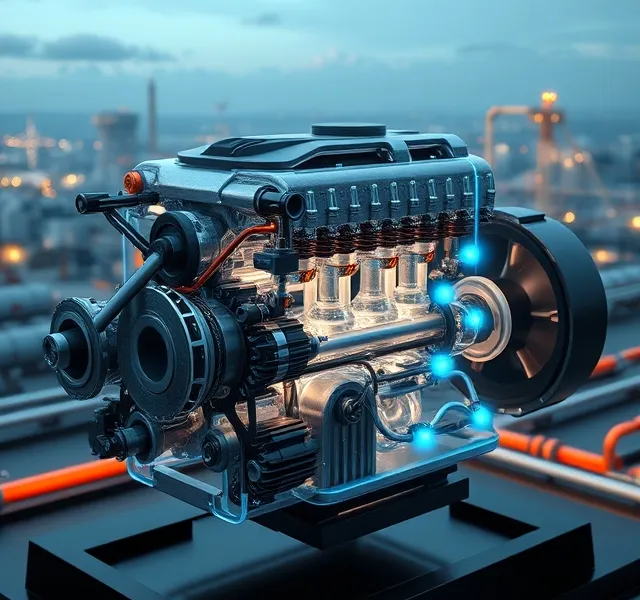
A comprehensive overview of hydrogen propulsion systems and their role in the global energy shift. The text highlights the mechanical distinctions between Hydrogen Fuel Cells (FCEVs), which generate electricity electrochemically, and Hydrogen Internal Combustion Engines (H2-ICE), which burn the gas directly inside modified engine blocks. It explores hydrogen's vital role in heavy transit, long-haul freight, and aviation, noting the historic milestone of the world’s first megawatt-class hydrogen turboprop test flight. Tracking its thermal efficiency against traditional petrol and battery electric systems, the text addresses the environmental debate, emphasizing that hydrogen's green status depends entirely on shifting production from fossil-fuel-derived 'grey hydrogen' to renewable-powered 'green hydrogen.' Finally, it outlines the retail market landscape, noting that mass retail availability is deferred until 2030 or later due to extensive infrastructure and green sourcing constraints.
📋 Quick Article Navigation Roadmap
Mid-Post Content Inline
Premium Layout Reserve Space • Status: Framework Mocked
Imagine a world where you pull up to a refueling station, fill your tank in less than five minutes, and drive away with absolutely zero toxic exhaust choking the streets. Instead, the only thing dripping from your tailpipe is pure, drinkable water. This is the promise of hydrogen technology - the most abundant element in the universe, harnessed to rewrite the rules of global transportation.
For generations, the energy sector has dreamed of a “Hydrogen Economy.” Today, that dream is no longer a science-fiction concept confined to laboratory test tubes. Major automotive alliances, shipping corporations, and aerospace groups are actively pouring billions into scaling hydrogen architectures.
But behind the clean marketing and bold headlines lies a complex maze of high-pressure physics, chemical engineering, and geopolitical infrastructure bottlenecks. To understand how hydrogen will reshape our reality, let’s pull back the casing on the science, track the efficiency benchmarks, evaluate the true environmental impact, and pin down exactly when you can actually buy a hydrogen car for your own garage.
🏛️ 1. The Twin Sciences: How Hydrogen Creates Physical Motion
When engineers talk about a “hydrogen vehicle,” they are actually referring to two completely distinct technologies. While both use the same atomic fuel, their internal mechanics operate in entirely different ways:
⚡ Technology A: Hydrogen Fuel Cell Electric Vehicles (FCEVs)
Think of a fuel cell vehicle as an electric car that carries its own onboard power plant instead of a heavy plug-in battery.
- The Electrochemical Dance: Hydrogen gas from a highly armored storage tank is pumped into a fuel cell stack.
- The Reaction: The system strips electrons away from the hydrogen atoms. As these electrons flow through an electrical circuit, they generate a massive stream of electricity that powers an electric motor to turn the wheels.
- The Exhaust: The spent hydrogen then bonds with oxygen drawn from the outside air, creating pure H₂O (water vapor) as its sole byproduct.
🔥 Technology B: Hydrogen Internal Combustion Engines (H2-ICE)
This approach is a direct evolution of the engines we have used for over a century. Instead of completely building a new electric vehicle layout, engineering teams modify standard petrol or diesel engine blocks.
- The Mechanical Burn: Gaseous hydrogen is injected directly into traditional cylinder chambers and compressed by a piston.
- The Ignition: A standard spark plug ignites the gas, creating a controlled, hyper-fast explosion that forces the piston down and turns a traditional crankshaft.
- The Exhaust: Because it burns pure hydrogen in ordinary air, the main byproduct is water vapor. However, because the engine uses lubricating oil and operates at intense heat, it does emit tiny trace amounts of nitrogen oxides (NOx).
During global manufacturing setups, companies select the architecture based on the vehicle’s purpose. FCEVs are ideal for smooth, silent luxury cars. Meanwhile, hydrogen combustion (H2-ICE) is highly favored for heavy vehicles because it can take lower-grade, less expensive hydrogen and easily handle extreme high-torque workloads without overheating a delicate battery system.
🚀 2. The Heavy Lifting: Freight, Planes, and Fighter Jets
While electric batteries have successfully taken over small passenger cars, they run into a structural brick wall when applied to massive, long-haul transport. This is exactly where hydrogen’s incredible energy density shines, promising to clean up the heaviest sectors on the planet.
- 🚛 Heavy Vehicles & Freight: A long-haul semi-truck carrying heavy battery packs loses tons of cargo capacity due to the dead weight of the battery. A hydrogen truck replaces that weight with lightweight carbon-fiber fuel tanks. Trucking companies like Volvo Trucks are aggressively validating hydrogen combustion engines to provide identical performance and 5-minute refueling times as traditional diesel platforms.
- ✈️ Commercial Aviation: Aerospace giants are treating hydrogen as the ultimate holy grail for net-zero aviation. Long-distance flight requires immense energy that batteries cannot provide. Innovation is moving rapidly: aerospace engineering groups successfully completed the historic maiden flight of a megawatt-class hydrogen turboprop engine (the AEP100) powering a 7.5-tonne cargo aircraft. Instead of using heavy fuel cells, this turboprop burns liquid hydrogen cooled to a freezing -253°C directly inside a turbine cycle. Meanwhile, Airbus continues to run its extensive Airbus ZEROe program, engineering future regional airliners to run on hydrogen fuel cells.
- 🛩️ Military Fighter Jets: Just like the electric motor limitations, supersonic combat jets cannot fly on fuel cells because they lack the raw, explosive exhaust velocity needed to break the sound barrier. However, defense aerospace architects are exploring advanced gas turbine systems modified to burn liquid hydrogen directly at extreme temperatures. Because hydrogen burns much faster and hotter than traditional jet fuel, these systems require advanced ceramic matrices to survive the thermal environment.
⏳ 3. The Historical Timeline: The Long Road to Clean Power
Hydrogen energy is not a flash-in-the-pan invention; it has evolved across distinct technological generations:
- The Primitive Foundations (Mid-1900s): Early aerospace groups began experimenting with hydrogen as a niche rocket fuel during the Space Race. In 1957, the NACA successfully modified a Martin B-57B bomber to fly on hydrogen for a short 20-minute flight test. These early systems were incredibly dangerous, highly volatile, and lacked the microchip computing power to safely control hydrogen gas lines.
- The Fuel Cell Concept Era (Early 2000s): Automotive brands began building hand-made, multi-million-dollar concept cars. While vehicles like the early Honda FCX proved that a car could drive on compressed gas, the fuel cells degraded far too quickly, and storing the gas required bulky, unsafe tanks.
- The Digital Precision Era (Current & Future Technology): Today, automakers like Toyota are developing high-performance 400-horsepower hydrogen combustion sports engines in collaboration with Yamaha and Kawasaki. Modern hydrogen vehicles utilize hyper-advanced 700-bar carbon-fiber reinforced tanks capable of withstanding bullet impacts without leaking, backed by electronic sensors that micro-manage gas flow at the molecular level.
📈 4. The Efficiency Matrix: The Combustion vs. Fuel Cell Divide
When comparing energy systems, engineers track Source-to-Wheel Efficiency - the total percentage of initial energy that successfully turns into forward movement.
| Technology Generation | Average Efficiency | Core Mechanical Trait |
|---|---|---|
| Traditional Piston Engines (Petrol/Diesel) | 30% - 40% | Massive energy loss through friction, cooling systems, and raw heat exhaust. |
| Hydrogen Combustion Engine (H2-ICE) | 35% - 45% | Utilizes existing engine blocks; wastes energy as heat but eliminates carbon emissions. |
| Hydrogen Fuel Cell Stack (FCEV) | 60% - 65% | Bypasses thermal combustion entirely; directly converts gas to electrical current. |
| Pure Battery Electric Vehicle (EV) | 85% - 90% | The undisputed efficiency champion; directly transfers grid power to the motor. |
While a hydrogen fuel cell is vastly more efficient than any internal combustion engine, it still lags behind a pure electric car. This is because energy is naturally lost at three points: when using electricity to create hydrogen, when compressing it into a high-pressure tank, and when converting it back into electricity inside the vehicle.
🌱 5. The Environmental Reality: Saving Nature or a Green Myth?
Is hydrogen truly a clean savior for nature, or is it an environmental illusion? The absolute truth depends entirely on a simple color code. Today, the hydrogen industry faces a massive structural paradox: Hydrogen is completely clean at the vehicle tailpipe, but it can be highly polluting at the production factory.
If a vehicle runs on Grey Hydrogen (which makes up roughly 99% of what is manufactured today), it is an environmental myth. Grey hydrogen is extracted from fossil fuels via steam methane reforming, which dumps massive amounts of carbon dioxide into our atmosphere before the fuel ever reaches a car.
However, if the industry scales up Green Hydrogen, it becomes a genuine environmental rescue. Green hydrogen is created by using clean renewable electricity (like solar or wind power) to split water into hydrogen and oxygen through a process called electrolysis. When green hydrogen is scaled globally, it offers a truly carbon-neutral, circular fuel network that creates zero emissions from production to tailpipe.
📅 6. Retail Timeline: When Will Hydrogen Cars Hit Your Local Road?
If you are a retail buyer looking to walk into a local dealership and purchase a hydrogen car for daily family commuting, you will need to exercise significant patience.
While advanced hydrogen fuel-cell cars like the Toyota Mirai and the Hyundai Nexo exist on the road today as engineering marvels, they are strictly restricted to microscopic, localized pilot regions (such as select urban areas in California, Germany, and Japan). In major developing markets, like India, the only hydrogen vehicles in operation are single units assigned to government research field trials; they are completely unavailable as public retail products.
The automotive industry’s current roadmap indicates that mass-market retail availability for everyday global citizens will not arrive until 2030 or beyond. The delay has nothing to do with the cars themselves, which are fully developed and ready. Instead, the retail launch is held back by three massive real-world bottlenecks:
- The Infrastructure Desert: Building high-pressure hydrogen refueling stations costs millions per location. Until thousands of stations form a unified highway network, buyers cannot practically drive across a country.
- The Sourcing Crisis: Mass-producing green hydrogen requires a monumental expansion of global solar and wind grids, a process that will take years to build out at an affordable scale.
- The Industrial Priority Shift: Because battery electric vehicles are far more efficient for small family cars, automakers are intentionally saving their hydrogen supplies to transform heavy commercial shipping, long-haul freight trucks, and regional aviation first.
🏁 Conclusion: The Unavoidable Energy Pivot
Ultimately, the science of the hydrogen engine shows that the universe’s simplest element can handle our planet’s most complex industrial workloads. It represents a massive technological pivot—not by replacing electric mobility, but by stepping in to provide the extreme torque, rapid refueling, and long-range muscle that batteries simply cannot deliver.
By understanding the clear division between fuel cells and direct combustion, looking past the marketing of grey hydrogen, and tracking the build-out of clean energy grids, global citizens can watch the future take shape clearly. Hydrogen will not instantly replace the car in your driveway tomorrow, but it is steadily anchoring itself as the invisible, high-powered foundation keeping our heaviest global industries moving forward cleanly.
Disclaimer: The articles on this website are created for informational and educational purposes with the assistance of artificial intelligence (AI) technologies. While our editorial team reviews, edits, and fact-checks all content to ensure maximum accuracy, Thank Wisdom and affiliates makes no warranties or representations regarding the completeness, reliability, or absolute accuracy of the information provided. Readers should consult relevant professionals before making decisions based on this content.