The Cosmic Eye: How Space Telescopes Rebuilt Our Understanding of the Universe
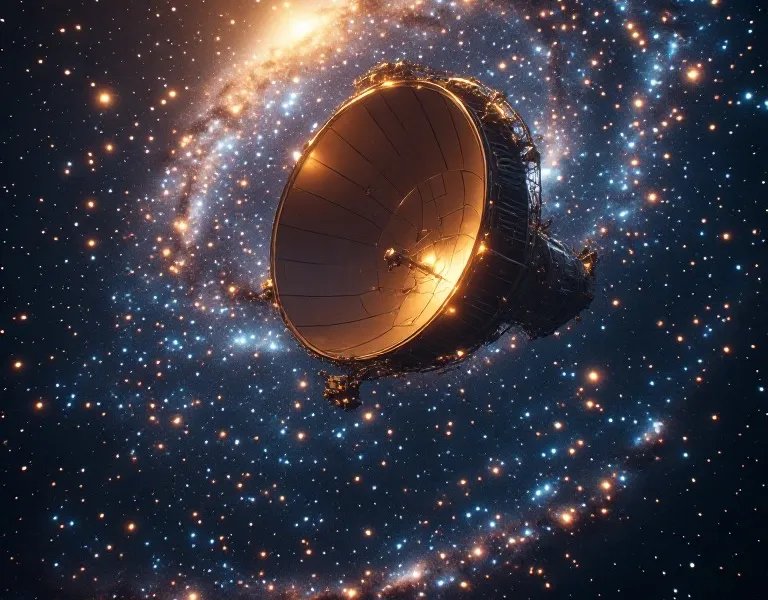
Space telescopes have completely transformed astronomy by bypassing Earth's atmospheric distortion to observe the cosmos across multiple wavebands. From early analog systems to the advanced infrared capabilities of modern flagships, these instruments have provided empirical evidence for the age of the universe, the existence of exoplanets, and the mechanics of cosmic expansion. By offering a direct look back into deep cosmic time, space observatories inspire every generation, continuously reshaping our understanding of planetary systems, cosmic chemistry, and our fundamental place in the universe.
📋 Quick Article Navigation Roadmap
Mid-Post Content Inline
Premium Layout Reserve Space • Status: Framework Mocked
For thousands of years, humanity looked up at the night sky through a distorting lens. Even on the clearest nights, the Earth’s thick, churning atmosphere acts like a frosted window, bending starlight, blocking crucial radiation, and blurring our vision of the cosmos. Early astronomers built increasingly massive ground-based observatories on top of the highest mountains, but they were always trapped at the bottom of an ocean of air.
When the mid-20th century arrived, space exploration opened up a radical new possibility: lifting our instruments entirely out of the atmosphere. By placing observatories directly into the vacuum of space, we created “The Cosmic Eye.” These complex instruments freed astronomy from the limits of Earth, allowing us to see the universe in its rawest, most brilliant forms.
Today, we are living in a golden age of space-based observation. Space telescopes are no longer just basic cameras taking pretty pictures of distant stars. Instead, they operate as highly sophisticated, autonomous physics laboratories. They track down the earliest cosmic signatures, map out the chemistry of distant alien planets, and fundamentally rewrite human knowledge. From early orbiters to modern infrared marvels, space telescopes have completely altered our place in the universe.
🔭 1. Sorting the Cosmic Eyes: The Main Types of Space Telescopes
Space telescopes are not all built the same way because the universe does not speak in just one language. Celestial objects emit energy across a massive spectrum, and each type of telescope is uniquely engineered to capture a specific slice of this cosmic information:
- Optical and Ultraviolet Observatories: These systems capture visible light - the same light our eyes see - along with shorter ultraviolet wavelengths. They specialize in high-resolution structural imaging of nearby galaxies, active star-forming nurseries, and dying planetary nebulae.
- Infrared Sentinels: Infrared light has longer wavelengths, allowing it to slip effortlessly through dense, dark clouds of cosmic dust. These telescopes act like thermal cameras, spotting hidden newborn stars and tracking deeply red-shifted light coming from the very edge of the observable universe.
- High-Energy X-Ray and Gamma-Ray Scanners: The most violent events in the cosmos do not emit soft light; they blast out high-energy radiation. These specialized space observatories look directly at extreme environments, such as the white-hot friction disks surrounding supermassive black holes and catastrophic stellar collisions.
By deploying an array of different space telescopes simultaneously, astronomers can assemble a multi-wavelength view of a single cosmic object. This layered data approach transforms a flat, ambiguous image into a deep, multi-dimensional profile of cosmic physics.
⚙️ 2. The Technological Odyssey: From Early Orbiters to Autonomous Giants
The engineering behind space telescopes has undergone a profound evolution over the last six decades. As our manufacturing and computational capabilities advanced, the technology powering these cosmic eyes shifted from rudimentary sensors to highly complex autonomous machines:
- The Pioneers (1960s - 1980s): Early missions like the Orbiting Astronomical Observatory (OAO) proved that scientific instruments could survive launch vibrations and operate reliably in a vacuum. These early systems relied on heavy, low-resolution analog sensors and primitive television tubes to transmit basic data back to Earth.
- The Hubble Era (1990s): The launch of the NASA/ESA Hubble Space Telescope marked a massive technological leap forward. It utilized a large 2.4-metre primary mirror and modular digital instruments that could be serviced in orbit by space shuttle astronauts. Hubble introduced ultra-precise gyroscopes and fine guidance sensors capable of locking onto a distant target with zero drift.
- The Cryogenic Infrared Revolution (2020s): Modern flagships, headlined by the James Webb Space Telescope (JWST), rely on radically different engineering. Because infrared instruments must stay incredibly cold to avoid reading their own heat signature, they utilize giant, five-layer kapton sunshields. JWST also pioneered ultra-lightweight, gold-coated beryllium mirror segments that folded up inside a rocket and unfolded autonomously in deep space.
This continuous technological march has drastically increased our structural sensitivity. Modern sensors can detect the faint heat signature of a bumblebee at the distance of the Moon, allowing humanity to look deeper into space than ever before.
📊 3. Rewriting the Textbooks: What the Cosmic Eye Has Revealed
Space telescopes have provided an absolute mountain of data that completely dismantled several foundational assumptions about astrophysics. Before these instruments reached orbit, much of our cosmic model was based on theoretical guesswork. The Cosmic Eye turned those theories into empirical facts:
- The Age and Expansion of the Universe: By measuring distant exploding stars with extreme precision, space telescopes helped calculate the definitive age of our universe at approximately 13.8 billion years. Even more shocking, they revealed that the expansion of space is not slowing down due to gravity, but is actually speeding up under the influence of a mysterious force called dark energy.
- The Ubiquity of Black Holes: Space observatories proved that supermassive black holes are not rare anomalies. Instead, they reside at the absolute center of almost every single major galaxy in the universe, acting as gravitational anchors that actively shape galactic evolution.
- The Discovery of Exoplanetary Worlds: For centuries, we did not know if other stars hosted planets. Specialized space systems like the Kepler Space Telescope monitored hundreds of thousands of stars, discovering thousands of alien worlds. They revealed that our galaxy actually contains more planets than stars, completely changing our perspective on the potential for alien life.
These discoveries did not just add footnotes to existing scientific papers; they fundamentally broke old models. The information gathered by these instruments has forced scientists to completely redesign their understanding of how matter, time, and gravity interact on a macro scale.
🧠 4. Cosmic Mapping: How Space Observation Explains Our Origins
To understand why space telescopes are so crucial, we must look at how they solve the ultimate puzzle: where did we come from? Ground-based instruments can see the current state of nearby stars, but space telescopes allow us to trace the long, unbroken chemical and structural chain that led to the creation of Earth:
- Time-Travel Through Light: Because light takes time to travel across the cosmos, looking deeper into space means looking further back in time. Space telescopes can capture light that left distant galaxies billions of years ago, giving us a literal look at the universe when it was in its infancy.
- The Origins of Elements: By studying the remnants of distant supernova explosions using high-energy space sensors, we learned exactly how heavy elements like iron, calcium, and gold are forged. These elements are blasted into space, mixing into giant dust clouds that eventually collapse to form new planets.
- Atmospheric Fingerprinting: Modern space telescopes utilize a technique called transmission spectroscopy. When an alien planet passes in front of its host star, the star’s light filters through the planet’s atmosphere. The space telescope analyzes this light to identify the exact chemical signatures of water vapor, carbon dioxide, and methane on worlds trillions of kilometers away.
This deep contextual data proves that the atoms making up our bodies were originally cooked inside ancient stellar furnaces. Space telescopes bridge the massive gap between abstract cosmic physics and our own physical existence, proving we are an intrinsic part of this cosmic system.
🚀 5. The Next Horizon: Future Technologies on the Launchpad
The structural evolution of space telescopes is accelerating as we look toward the next several decades. Space agencies worldwide are already developing the next generation of observatories, moving far beyond the design parameters of our current systems:
- Giant Optical Monoliths: Future concepts, such as the Nancy Grace Roman Space Telescope and the proposed Habitable Worlds Observatory, will feature incredibly wide fields of view. They are engineered to scan the sky thousands of times faster than Hubble, capturing millions of galaxies in a single sweep.
- Advanced Starlight Blockers: To take direct images of small, Earth-like alien planets, future space telescopes will deploy massive external “starshades.” These are giant, sunflower-shaped structures positioned tens of thousands of kilometers ahead of the telescope to perfectly block a star’s blinding glare while letting the faint light of a planet pass through.
- Mega-Arrays in Deep Space: Instead of relying on a single large mirror, future missions plan to launch networks of smaller, coordinated space telescopes operating in perfect synchronization. By digitally combining their data through interferometry, these arrays can create a virtual telescope mirror hundreds of meters wide, capable of imaging the surface details of distant alien worlds.
These upcoming platforms will completely eliminate the remaining blind spots in our cosmic maps. They are specifically built to answer the ultimate burning question: is there another living, breathing biosphere out there in the dark?
👥 6. Shifting Perspectives: How the Cosmic Eye Touches Every Generation
The steady stream of discoveries coming from space telescopes does not just impact academic laboratories. It reshapes the cultural, psychological, and practical outlook of every generation alive today:
The Connected Vanguard (Gen Z and Gen Alpha)
For the youngest generations, a multi-planet universe is a basic, self-evident truth. They have grown up with stunning, high-definition deep field images on their personal screens since childhood. This unfiltered access inspires a massive interest in software engineering, data science, and aerospace careers, turning deep space into an actionable frontier rather than a distant abstraction.
The Active Architects (Millennials and Gen X)
Working professionals have witnessed the ultimate paradigm shift. They grew up in a world where planets outside our solar system were pure science fiction, and they watched space telescopes turn them into real, mappable places. This generation leverages these massive cosmic data streams to develop advanced image-processing algorithms, new materials, and complex camera sensors that directly improve everyday consumer electronics on Earth.
The Golden Legacy (Baby Boomers)
For older adults, space telescopes represent the ultimate fulfillment of a lifelong human journey. They vividly remember the grainy, black-and-white moon landings and the early, uncertain steps of space exploration. Seeing these high-fidelity space observatories map the universe brings a profound sense of awe, unity, and perspective, offering a comforting reminder of humanity’s incredible collective intelligence and curiosity.
The Architecture of Space Observation
Space Telescope Epoch Primary Waveband Focus Core Technological Innovation Foundational Scientific Milestone The Analog Pioneers (e.g., OAO-2) Ultraviolet & Optical First stabilized orbital scientific payload platforms. Proved that stars emit massive amounts of UV light hidden from Earth. The Modular Flagships (e.g., Hubble) Visible, UV, & Near-Infrared Orbital servicing design with fine guidance stabilization. Calculated the precise age of the universe and dark energy expansion.The Cryogenic Explorers (e.g., JWST) Mid to Near-Infrared Foldable beryllium mirrors and multi-layer kapton sunshields. Imaged the earliest primitive galaxies and analyzed exoplanet atmospheres. The Future Megastructures (e.g., Roman) Wide-Field Infrared Large-scale micro-shutter arrays and coronagraph starshades. Will map dark matter distribution and directly image Earth-like worlds.
The Architecture of Space Observation
| Space Telescope Epoch | Primary Waveband Focus | Core Technological Innovation | Foundational Scientific Milestone |
|---|---|---|---|
| The Analog Pioneers (e.g., OAO-2) | Ultraviolet & Optical | First stabilized orbital scientific payload platforms. | Proved that stars emit massive amounts of UV light hidden from Earth. |
| The Modular Flagships (e.g., Hubble) | Visible, UV, & Near-Infrared | Orbital servicing design with fine guidance stabilization. | Calculated the precise age of the universe and dark energy expansion. |
| The Cryogenic Explorers (e.g., JWST) | Mid to Near-Infrared | Foldable beryllium mirrors and multi-layer kapton sunshields. | Imaged the earliest primitive galaxies and analyzed exoplanet atmospheres. |
| The Future Megastructures (e.g., Roman) | Wide-Field Infrared | Large-scale micro-shutter arrays and coronagraph starshades. | Will map dark matter distribution and directly image Earth-like worlds. |
🏁 Conclusion: Living in an Illuminated Cosmos
Ultimately, space telescopes are much more than complex collections of mirrors, metal, and code. They are the ultimate expression of human curiosity, extending our sight across billions of light-years of empty space and time. By lifting our eyes above our planet’s turbulent atmosphere, we have successfully transformed the cosmos from a terrifying, pitch-black void into a deeply vibrant, thoroughly readable map of history.
As these instruments continue to peer into hidden star nurseries, decode the heavy elements that build planets, and analyze the air of alien worlds, they constantly remind us of our true scale. We live on a tiny oasis of life within a beautifully complex, ever-expanding universe. By continuing to fund, build, and launch these deep-space eyes, we ensure that future generations will never have to guess about their origins, but can instead look up at a universe that is fully illuminated, deeply understood, and open for discovery.
Disclaimer: The articles on this website are created for informational and educational purposes with the assistance of artificial intelligence (AI) technologies. While our editorial team reviews, edits, and fact-checks all content to ensure maximum accuracy, Thank Wisdom and affiliates makes no warranties or representations regarding the completeness, reliability, or absolute accuracy of the information provided. Readers should consult relevant professionals before making decisions based on this content.