The Deep-Sea Data Highway: How the Petal Transoceanic Cable Ignited a Petabit Internet Revolution
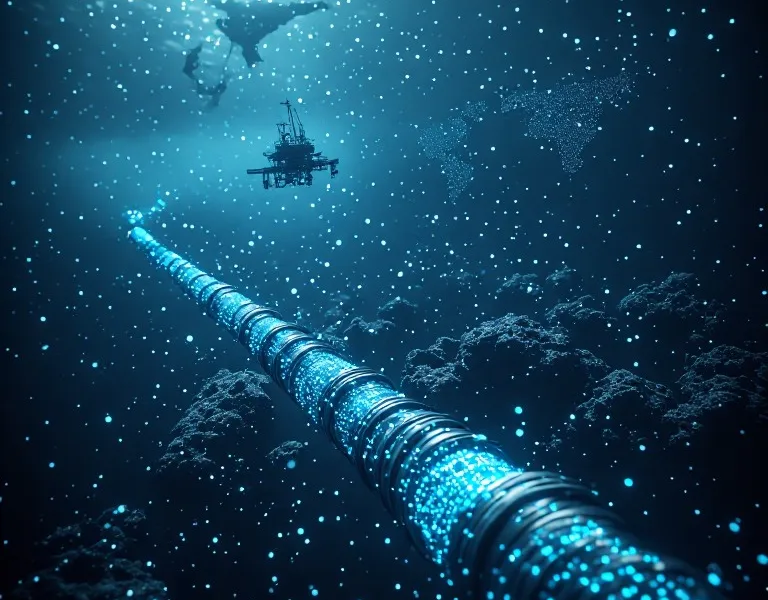
While wireless satellites capture headlines, over 95% of international internet traffic travels through a delicate network of underwater fiber-optic cables resting on the ocean floor. Driven by the explosive data demands of generative AI, spatial computing, and global automation, this legacy network has been pushed to a severe bandwidth bottleneck. This structural limitation has been shattered by the deployment of Petal - a 4,300-mile petabit transoceanic internet cable that has pushed ocean-floor data speeds to an unprecedented 1 million gigabits per second (1 petabit). By abandoning traditional single-core fibers in favor of Multi-Core Fiber (MCF) technology and Spatial Division Multiplexing (SDM), Petal functions as a multi-lane light superhighway. The breakthrough completely eradicates cross-border network latency, laying the groundwork for a truly real-time global economy, zero-lag enterprise cloud scaling, and secure data pipelines built to withstand the brutal environment of the deep ocean.
📋 Quick Article Navigation Roadmap
Mid-Post Content Inline
Premium Layout Reserve Space • Status: Framework Mocked
Take a moment to think about the invisible web of connectivity that defines your daily life. Every time you stream a high-definition movie, execute an international stock trade, back up photos to the cloud, or jump onto a borderless video call, data flashes across the planet in a fraction of a second. Most people assume this information travels through space via wireless satellites. In reality, the true lifeblood of the global internet lies buried beneath miles of dark, freezing water. Over 95% of international data is carried through a delicate network of undersea fiber-optic cables resting on the ocean floor.
However, the sheer volume of global digital traffic is pushing this underwater infrastructure to its absolute breaking point. As artificial intelligence models, real-time automation, and immersive digital environments flood the global grid, the world is facing a severe data bandwidth bottleneck.
Enter the dawn of a new telecommunications era. In a historic engineering milestone, global infrastructure syndicates have completed the deployment of Petal - a massive, 4,300-mile petabit transoceanic internet cable. Stretching across vast ocean basins, this deep-sea marvel has pushed data speeds to an astonishing 1 million gigabits per second (1 petabit). This monumental achievement completely rewrites the rules of international telecommunications, destroying latency barriers and laying down the foundational highway for the next century of global human innovation.
🏛️ 1. The Undersea Bottleneck: The Looming Crisis of Global Data Demand
To understand why the deployment of Petal is such a historic milestone, we must first look at the massive architectural strain currently facing our global internet infrastructure. For decades, transoceanic cables operated on the scale of terabits per second. While a speed of 10 to 100 terabits sounded massive a decade ago, it is quickly becoming obsolete in the face of modern computational requirements.
Every single second, the global economy generates an unimaginable volume of data-heavy transactions and communications. The rise of specific digital technologies has accelerated this consumption exponentially:
- Generative AI Pipelines: Training and interacting with massive, continuous, data-dense neural network models requires constant cross-border server synchronization.
- Immersive Spatial Computing: High-fidelity virtual and augmented reality frameworks demand zero-lag streaming to prevent spatial disorientation.
- The Internet of Things (IoT): Billions of connected smart devices, automated factory grids, and smart city nodes continuously dump micro-telemetry data across international servers.
Until now, standard fiber-optic cables simply lacked the physical capacity to carry this digital avalanche simultaneously. When data volume spikes, transoceanic paths experience localized data traffic jams, leading to micro-second latency lags, slower transmission speeds, and elevated operational costs for global networks. Petal shatters this structural glass ceiling by introducing a massive data pipeline capable of carrying more traffic in a single second than hundreds of traditional cables combined.
🧪 2. The Science of the Petabit: Multi-Core Fibers and Spatial Multiplexing
How does the Petal cable manage to squeeze 1 million gigabits of data through a physical line resting on the ocean floor? The secret lies in a radical transformation of the core glass fibers themselves.
Traditional undersea cables rely on Single-Core Fibers (SCFs). Inside these cables, a single strand of ultra-pure glass carries data using a single beam of laser light. To step up capacity, engineers historically pushed more laser power into the glass. However, they hit a hard physical limitation known as the “fiber non-linear limit.” If you pump too much laser energy into a single core, the glass overheats, distorting the light signals and corrupting the data.
Petal bypasses this boundary by pioneering the commercial deployment of Multi-Core Fiber (MCF) technology alongside an advanced process known as Spatial Division Multiplexing (SDM).
Instead of a single glass core, each microscopic strand inside Petal contains multiple independent pathways huddled together inside a single fiber shell. Imagine upgrading a narrow, congested one-lane country road into a massive, multi-lane superhighway without making the physical road any wider.
By utilizing highly specialized lasers that shoot data simultaneously across distinct spatial angles within these multi-core fibers, Petal achieves continuous petabit velocity without experiencing thermal distortion or signal degradation. It is a masterclass in optical physics that redefines the bandwidth potential of physical matter.
⚡ 3. The Death of Latency: What 1 Million Gigabits Means for Global Industry
The immediate, practical reward of Petal’s 1-petabit capability is the structural eradication of international network latency. Latency is the minute delay that occurs when a digital signal travels from a device, across an ocean, to a foreign server, and back again. In the modern business ecosystem, a delay of even a few milliseconds can translate into billions of dollars in lost opportunities or operational failures.
By expanding deep-sea data pipelines to 1 million gigabits per second, Petal provides the global industrial landscape with an un-disruptible, real-time connection:
- Algorithmic Financial Operations: International banking entities and stock exchanges can sync trade ledgers across continents instantaneously, eliminating the market discrepancies caused by delayed execution times.
- Decentralized Cloud Computing: Multinational corporations can manage unified cloud server nodes across different hemispheres, allowing employees to collaborate on massive, complex datasets with zero local lag.
- Global Supply Chain Automation: Automated cargo ports, shipping fleets, and logistics hubs can coordinate multi-step supply chains in real time, responding to sudden inventory changes across oceans in milliseconds.
For sectors that rely on hyper-fast data processing, Petal turns the dream of a truly unified, real-time global marketplace into an absolute reality. It marks the transition from an internet that feels “fast” to a network that operates at the absolute speed of light.
🔒 4. Guardian of the Abyss: Engineering a Cable for the Ocean Floor
Deploying a 4,300-mile data highway across the deep ocean is one of the most perilous engineering challenges on Earth. The floor of the ocean is a brutal, alien environment. At depths of up to 20,000 feet, the Petal cable must withstand intense atmospheric pressure, near-freezing water temperatures, seismic activity, and deep-sea current shifts.
To protect the delicate multi-core glass fibers inside, Petal is wrapped in an intricate, multi-layered protective armor. The core fibers are safely sealed inside a high-strength copper tube that carries electrical currents to power underwater signal repeaters. This tube is then encased in a rugged steel strand wire matrix, followed by a thick layer of waterproof petroleum jelly, and finally sealed within a heavy outer skin of industrial-grade polyethylene.
Furthermore, the path of the cable was meticulously mapped using advanced sonar technology to avoid deep underwater volcanoes, unstable tectonic trenches, and high-risk commercial fishing zones where anchors could snag the line. If a localized submarine earthquake or landslide does occur, Petal is engineered with structural elasticity loops that allow the cable to stretch and shift without snapping. It is a highly resilient, self-sustaining piece of infrastructure built to quietly guard the global flow of information for decades to come.
👥 5. Lifelong Impact: How High-Speed Transoceanic Fiber Shapes Your World
The deployment of the Petal petabit cable network will fundamentally alter the daily realities of education, career development, and social connection for all age groups across our global society.
The Digital Vanguard (Gen Z and Gen Alpha)
For younger generations, Petal sets a new baseline for what is possible in digital environments. They will be the first generation to grow up with truly borderless, lag-free interactions. Whether they are pursuing online university degrees through real-time holographic classrooms or collaborating on open-source coding projects with peers on the other side of the planet, this petabit highway ensures that geographic distance is completely irrelevant to their personal and professional growth.
The Economic Core (Millennials and Gen X)
Working professionals, tech entrepreneurs, and remote business managers will experience a massive relief from digital friction. The massive bandwidth provided by Petal means that network slowdowns during peak working hours will become a thing of the past. Business owners can deploy highly complex, cloud-hosted software suites and run international operations effortlessly, secure in the knowledge that their remote workforces are backed by an unshakable infrastructure.
The Elder Generation (Baby Boomers)
For older adults, the primary benefits of this infrastructure leap will manifest in the rapid advancement of global tele-healthcare and personal connectivity. High-bandwidth undersea fibers allow leading medical specialists to conduct remote diagnostic consultations and guide robotic surgical operations across international borders in real time. On a personal level, it enables older family members to stay deeply connected with children and grandchildren living overseas through crystal-clear video streaming that makes oceans feel as narrow as a neighborhood street.
📊 The Evolution of Global Connectivity
The journey from early copper telegraph wires to the multi-core petabit optical fibers of the Petal cable marks the complete transformation of human communication. The table below outlines this vital technological progression.
| Era of Connectivity | Primary Core Material | Maximum Data Transfer Speed | Global Practical Impact |
|---|---|---|---|
| The Telegraph Era | Heavy copper wire strands transmitting electrical pulses. | A few words per minute via manual Morse code. | Allowed the first text-based messages to cross oceans in hours. |
| Traditional Fiber | Single-core glass fibers transmitting a single laser beam. | Up to 100 terabits (100,000 gigabits) per second. | Built the modern internet, online video streaming, and mobile networks. |
| Petabit Fiber (Petal Milestone) | Multi-core glass fibers using Spatial Division Multiplexing. | 1 petabit (1,000,000 gigabits) per second. | Powers borderless AI networks, millimeter latency, and real-time automation grids. |
🏁 Conclusion: Navigating a Truly Connected Planet
Ultimately, the successful deployment of the Petal transoceanic cable proves that humanity’s drive for connection will always find a way to conquer the vastest natural barriers on Earth. By looking past the physical limits of traditional single-core fibers and engineering a multi-lane highway across the deep ocean floor, infrastructure architects have provided our civilization with an unprecedented digital foundation.
As the Petal network begins channeling traffic across deep-sea basins, the boundaries that once isolated industries, delayed communications, and restricted innovation will quietly evaporate. By understanding these structural shifts today, global citizens of every generation can prepare for a future anchored by a network that keeps our connected world moving in perfect harmony, one petabit at a time.
Disclaimer: The articles on this website are created for informational and educational purposes with the assistance of artificial intelligence (AI) technologies. While our editorial team reviews, edits, and fact-checks all content to ensure maximum accuracy, Thank Wisdom and affiliates makes no warranties or representations regarding the completeness, reliability, or absolute accuracy of the information provided. Readers should consult relevant professionals before making decisions based on this content.