The Digital Laboratories: How Gen Z is Rebuilding Global Civic Engagement from the Ground Up
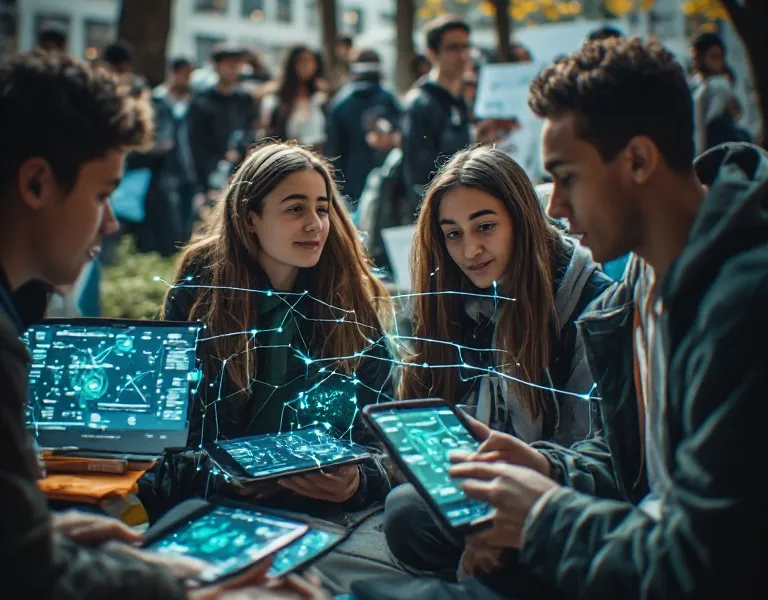
Traditional metrics often misinterpret lower youth voter turnout as political apathy. However, recent studies show that Generation Z (Gen Z) is completely rewriting the rules of political participation by turning online spaces into dynamic 'civic laboratories.' Moving past top-down legacy structures, these digital-native activists leverage decentralized networks, algorithmic trends, and open-source intelligence to crowdsource global advocacy. Through daily expressions of micro-activism - including viral consumer boycotts, memetic satire, and peer-to-peer mutual aid crowdfunding - civic engagement has transformed from a seasonal voting event into a continuous lifestyle choice. By building a functional 'phygital bridge,' Gen Z seamlessly translates online momentum into real-world institutional impact, upgrading the operating system of global democracy for a connected world.
📋 Quick Article Navigation Roadmap
Mid-Post Content Inline
Premium Layout Reserve Space • Status: Framework Mocked
For generations, the traditional roadmap for civic engagement was written in stone. Political participation meant attending local town hall meetings, printing paper flyers, knocking on neighborhood doors during election cycles, and ultimately casting a physical ballot at a local community center. For decades, sociologists tracked youth civic health through these exact metrics. When voter turnouts among young demographics dipped, commentators frequently labeled younger citizens as disengaged or politically apathetic.
However, a massive structural migration has completely upended this historical framework. The emergence of Generation Z (Gen Z) as a dominant global force has dismantled traditional political spaces. Rather than abandoning civic life, young adults and teenagers globally have migrated en masse to the digital ecosystem.
New institutional studies reveal that online spaces, decentralized communities, and alternative digital movements are functioning as highly sophisticated “civic laboratories.” Within these digital boundaries, the very definition of modern political participation is being completely rewritten. Far from being passive consumers of content, Gen Z is leveraging advanced digital tools to turn the internet into an active, borderless incubator for global systemic change.
📊 1. Inside the Lab: The Architecture of Digital Civic Spaces
To understand how online spaces transform into active civic laboratories, we must first analyze the unique digital architecture that governs them. Traditional political organizing is heavily top-down, relying on rigid hierarchies, central party committees, and established institutional funding pipelines. This structure frequently creates a high barrier to entry for young people who lack capital or political connections.
Digital spaces shatter this historical barrier by operating on decentralized, peer-to-peer networks. In these virtual environments, anyone with a smartphone and an internet connection can instantly launch a global advocacy movement. Gen Z views these digital platforms not merely as entertainment hubs, but as functional open-source tooling kits:
- Algorithmic Mobilisation: Gen Z creator networks have mastered the mathematics of platform algorithms. By intentionally manipulating trending sounds, hashtags, and visual formats, they can broadcast a hyper-localized human rights issue to millions of global viewers within hours.
- Decentralized Organizing Arrays: Using platforms like Discord, encrypted messaging applications, and collaborative cloud documents, young activists form modular task forces across different time zones without ever meeting in person.
- Crowdsourced Open-Source Intelligence (OSINT): Younger digital networks leverage crowdsourced data to fact-check political speeches in real time, map environmental degradation via public satellite feeds, and document social injustices transparently.
This unique combination of low entry barriers and hyper-speed distribution transforms the internet from a passive messaging board into a dynamic sandbox for political experimentation. It allows organic, grassroots ideas to be tested, modified, and scaled at a speed that traditional political parties simply cannot match.
🏛️ 2. The Micro-Activists: Redefining Political Currency and Action
For older generations, political participation is defined by large, explicit actions: joining an official campaign, donating to a registered political action committee, or marching in a physical street rally. Gen Z has expanded this currency by pioneering the concept of micro-activism. They believe that every single digital footprint is an active political choice.
In the civic laboratories of the internet, small everyday digital interactions are compiled into massive expressions of political power:
- Conscious Consumption and Digital Boycotts: Gen Z utilizes short-form video essays to audit corporate supply chains. A single viral breakdown of a company’s labor practices can trigger an immediate, international digital boycott, forcing corporate entities to alter policies to preserve their market positions.
- Memetic Warfare and Satire: Complex, dense geopolitical policies are frequently translated into viral memes and sharp satirical videos. By stripping away dry academic jargon and using humor, young creators expose institutional contradictions, making political awareness accessible to readers of all ages globally.
- Micro-Crowdfunding Ecosystems: Rather than relying on traditional political fund-raisers, Gen Z leverages peer-to-peer digital wallets to instantly finance mutual aid funds, medical emergencies, and local environmental initiatives, completely bypassing slow bureaucratic charities.
This shift proves that modern political participation is no longer a seasonal activity tied exclusively to election years. For Gen Z, civic engagement is an ongoing, fluid, and hyper-personalized lifestyle choice woven directly into their daily digital routines.
🔒 3. The Counter-Culture: Navigating Misinformation and Surveillance Risks
Operating a civic laboratory in a digital environment is not without severe systemic risks. As young networks aggressively leverage the internet for political organization, they find themselves operating in a highly volatile landscape marked by weaponized misinformation, digital surveillance, and data harvesting.
The biggest threat facing digital civic laboratories is the pollution of the information ecosystem. State actors, corporate entities, and automated bot networks continuously flood digital spaces with hyper-realistic deepfakes, synthetic media, and polarizing alternative facts.
For a generation that consumes the majority of its news via social media feeds, navigating this landscape requires advanced cognitive resilience.
Furthermore, younger activists are highly aware of algorithmic surveillance. They know that corporate algorithms track their political associations and data profiles. To protect their digital perimeters, Gen Z networks are developing sophisticated counter-strategies. They utilize encrypted communications, adopt specialized slang to bypass keyword moderation blocks, and actively train their peers in digital hygiene and media literacy. This continuous cat-and-mouse game between grassroots code and institutional tracking is turning Gen Z into the most digitally vigilant generation in human history.
🎛️ 4. The Phygital Bridge: Translating URL Mobilisation to IRL Impact
The most frequent critique leveled against digital activism by traditional political scientists is the threat of “slacktivism” - the idea that clicking a like button or resharing a post gives users a false sense of political accomplishment without creating real-world change. However, modern institutional studies show that Gen Z’s digital laboratories are highly effective at building a phygital bridge - translating digital URL momentum into massive, real-world (In Real Life - IRL) institutional impact.
The digital lab is not an alternative to real-world action; it is the ultimate training ground for it.
Before Gen Z activists take to the physical streets, they use their digital sandboxes to coordinate logistical safety networks, distribute legal resource guides, arrange medical support teams, and coordinate media messaging. When a movement goes physical, the digital layer continues to operate as a real-time command center.
From organizing international climate strikes that bring millions of students to city halls, to driving historic voter registration spikes through digital outreach campaigns, Gen Z proves that a well-engineered digital spark can completely transform the physical architecture of global governance.
👥 5. Lifelong Impact: How Digital Civic Labs Shift Every Generation
The migration of political life into the digital realm is not an isolated youth trend. It is creating massive ripples that reshape how all generations across our global society interact with governance, community, and power.
The Digital Vanguard (Gen Z and Gen Alpha)
For the youngest citizens, traditional politics feels like an archaic, non-responsive system. They are cultivating a new expectation of governance: it must be transparent, immediate, and participatory. As Gen Alpha follows Gen Z into these digital laboratories, they will continue to invent new forms of decentralized, code-based democracy, ensuring that the future of global civic life remains digital-native.
The Economic Core (Millennials and Gen X)
Working professionals, community organizers, and current political leaders are forcing a massive modernization of their structures to keep pace with Gen Z. Traditional political campaigns, non-profit charities, and local governments are discarding their legacy outreach templates and aggressively adopting digital laboratory strategies to avoid becoming completely irrelevant to the modern electorate.
The Elder Generation (Baby Boomers)
For older adults, the transition to digital-first civic spaces presents both challenges and massive opportunities. While navigating fast-moving digital platforms can feel exclusionary, the democratization of information allows seniors to engage with grassroots local issues more directly than ever before. Intergenerational alliances are forming online, where the historical wisdom of elder advocates marries perfectly with the technical capabilities of digital-native youth.
📊 The Evolution of Civic Participation
The journey from centralized legacy systems to modern, digital-native civic laboratories redefines the mechanics of how citizens interact with societal power. The table below outlines this vital evolutionary path.
| Civic Component | Legacy Framework | Digital Laboratory Architecture | Societal & Economic Impact |
|---|---|---|---|
| Communication Channels | Centralized broadcast media, paper flyers, and physical town halls. | Decentralized short-form video networks, algorithmic trends, and community forums. | Democratizes international information flow and destroys geographic isolation. |
| Organizational Matrix | Top-down political hierarchies and slow bureaucratic committees. | Flat, modular, peer-to-peer digital networks and open-source task forces. | Enables hyper-speed global mobilization with zero overhead costs. |
| Primary Action Metrics | Seasonal voter turnout, physical signatures, and campaign donations. | Continuous micro-activism, conscious consumer choices, and mutual-aid crowdsourcing. | Transforms civic responsibility from a seasonal task into a fluid, daily lifestyle. |
🏁 Conclusion: Cultivating an Open-Source Democratic Future
Ultimately, the transformation of online spaces into civic laboratories proves that the human drive for community, justice, and self-governance will always adapt to the most advanced tools of the era. Gen Z is not abandoning the democratic project; they are upgrading its operating system for a connected global world.
By shifting political participation out of exclusive, slow legacy institutions and into transparent, rapid digital spaces, these young innovators are making civic engagement highly accessible, experimental, and global. As long as our society continues to protect digital freedoms, manage misinformation risks, and build strong bridges between online momentum and real-world execution, these digital laboratories will continue to function as the ultimate incubator for a freer, fairer, and more deeply connected global future.
Disclaimer: The articles on this website are created for informational and educational purposes with the assistance of artificial intelligence (AI) technologies. While our editorial team reviews, edits, and fact-checks all content to ensure maximum accuracy, Thank Wisdom and affiliates makes no warranties or representations regarding the completeness, reliability, or absolute accuracy of the information provided. Readers should consult relevant professionals before making decisions based on this content.